A Simple, Realistic, and Smart Way to Save $1,500 in a Year
Can you save $1,500 for an emergency fund this year? Yes, you can - with a savings challenge! This $1,500 savings challenge requires $20-40 per week to save, using a bell curve strategy so you save more when money flows and less during expensive times of year. Here’s how this simple plan works.
Most savings challenges fail because they ask you to save the most money when life is the most expensive. Like increase your savings amount every week and you'll have $1,300 by the end of the year. That's great until December when you would be saving $50+ per week! Who has an extra $200 in December??
This plan flips that. It uses a "bell curve" approach so you save more when cash is flowing (tax refund and bonus time) and less when expenses are high (back-to-school, Thanksgiving, The Holidays).
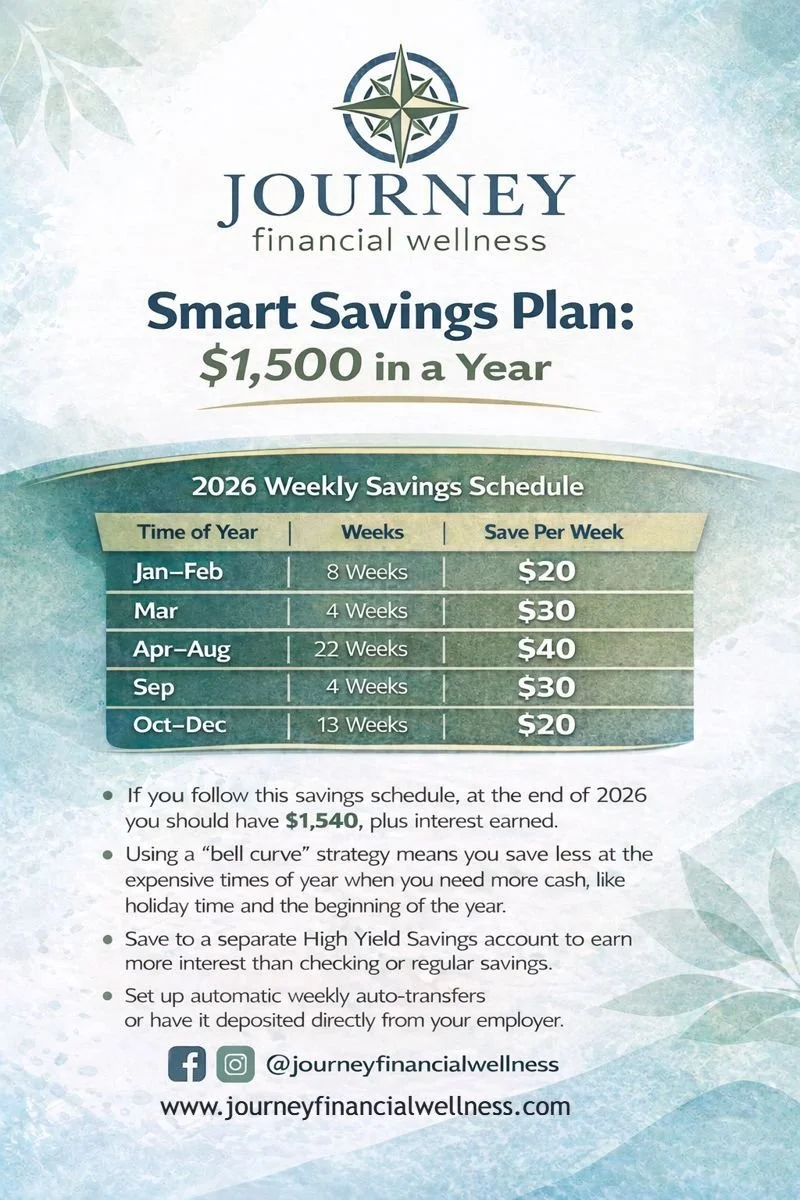
Start today and follow this schedule; after 12 months you should have $1,540, plus whatever interest your savings earns.
Annual Weekly Savings Schedule - Save Per Week:
Jan–Feb: $20 per week
Mar: $30 per week
Apr–Aug: $40 per week
Sep: $30 per week
Oct–Dec: $20 per week
Total for the year: $1,540 (plus interest earned)
Why This Works:
This plan is built around how money actually flows during the year.
• You save less at expensive times like the holidays and right after the holidays
• You save more when tax refunds and steady income make it easier
• You never have to save more than $40 in any week
That makes this realistic, sustainable, and far more likely to be completed.
How to Set It Up:
Open a High Yield Savings Account that is separate from your checking account. This helps you earn more interest and keeps the money out of sight so you are not tempted to spend it.
Set up automatic weekly transfers based on the schedule above. You can do this through your bank or have it deposited directly from your paycheck. Automation turns this from something you have to remember into something that just happens.
What to Expect:
If you follow the schedule, you...
• Will have $1,540 by the end of the year (or after 12 months depending on when you start), plus interest
• Will build the habit of saving without overwhelming your budget
• Will avoid the stress and guilt that derail most savings challenges
This is how saving becomes something you do, not something you fight.